High-performance CNC-machined components engineered for aerospace, automotive, surgical, and high-frequency optical applications.
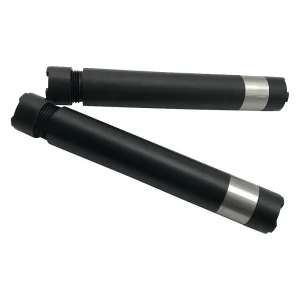
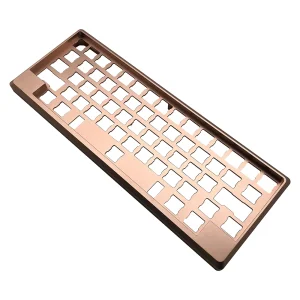
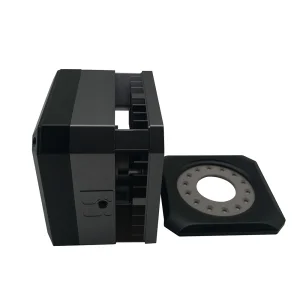
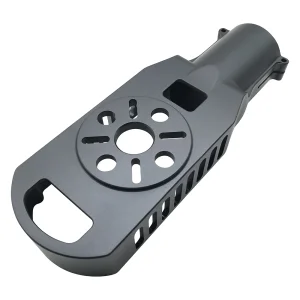
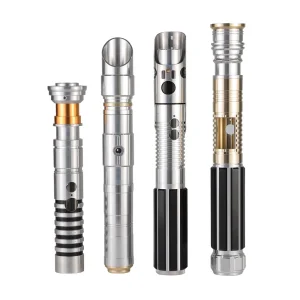
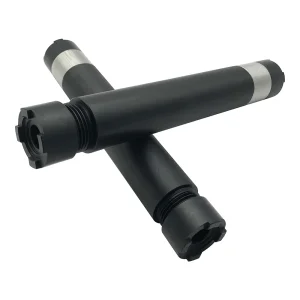
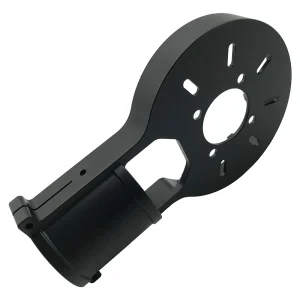
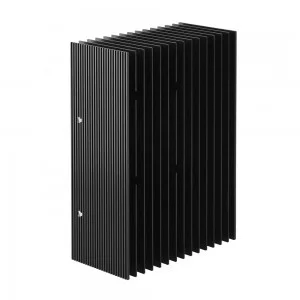
Shenzhen Xiang Xin Yu Technology Co., Ltd. is a high-technology enterprise specializing in precision CNC machining, backed by decades of technical acumen, dynamic process development, and structural industry intelligence. Operating from Shenzhen, China's silicon hardware capital, we maintain a robust processing ecosystem designed to execute rapid prototyping and low-volume production with extreme micro-tolerances.
We are equipped with advanced multi-axis CNC machine tools and inspection equipment capable of interpreting and executing complex geometries. From structural aerospace components demanding strict weight-to-strength ratios to optoelectronic housings needing diffraction-limited precision, our engineering workflows guarantee repeatability and material compliance. Our customer-centered methodology integrates Design for Manufacturability (DFM) verification to ensure engineering models scale seamlessly into serial production.

The term "discount" in modern precision engineering does not denote compromised structural integrity; rather, it refers to systemic cost-optimization achieved through clustered supply chain dynamics. China, specifically the Pearl River Delta, has evolved past simple labor arbitrage into a vertically integrated ecosystem for rapid prototyping and mass-production solutions. Choosing a Chinese CNC prototype manufacturer provides strategic engineering advantages:
"Optimized multi-axis toolpaths and close raw material proximity enable discount pricing structures while maintaining positioning tolerances of ±0.005mm."
Modern CNC prototyping has shifted toward smart machining, hybrid automation, and advanced manufacturing capabilities. These advancements are transforming rapid product development:
Traditional 3-axis setups require complex fixtures and multiple setups, introducing stacking errors. Modern 5-axis machines eliminate manual indexing, enabling complex geometries, organic profiles, and deep cavities to be machined in a single setup. This improves GD&T (Geometric Dimensioning and Tolerancing) parameters.
Artificial Intelligence (AI) and generative design software produce lightweight, bio-mimetic components that are difficult to machine using conventional methods. Modern CAM systems analyze part geometry to calculate adaptive trochoidal milling paths, reducing tool wear and improving heat dissipation.
On-machine probing and automated Coordinate Measuring Machines (CMM) ensure real-time inspection. High-tolerance components are verified inside the workspace, allowing for dynamic offset corrections before the workpiece is removed from the fixture.
Our foundation is built on core values that drive engineering excellence and customer success.

We encourage employees to continuously explore new processing methods and technologies to improve production efficiency and product quality and meet the changing needs of customers.

We pursue excellent quality, strictly control every processing link, and strive for zero defects to provide customers with the best products.

Team members support and collaborate with each other, jointly overcome difficulties, share experiences and knowledge, and form a strong whole.

Establish honest and cooperative relationships with customers and suppliers, keep promises, and treat every business with honesty and fairness.

We are well aware that every product is related to the interests and safety of customers. Therefore, we always maintain a high sense of responsibility and take every job seriously.

Respect the personality and ideas of each employee, provide a good development space for employees, and also respect the needs and opinions of customers.
Precision prototyping demands tailored engineering strategies. Standard CNC machine parameters must be adapted to meet the specific requirements of different target sectors:
Aerospace components operate under extreme thermal and atmospheric conditions. Machining aerospace-grade titanium (Ti-6Al-4V) or aluminum (7075-T6) requires careful stress-relief processes. We utilize deep cryogenic treatments and post-machining heat treatments (e.g., T6 aging) to prevent dimensional shifts after structural skin removal.
Optical housings, camera barrels, and mirror mounts require exact alignments. A standard micron deviation can affect focal points. Our manufacturing processes include ultra-precise single-point diamond turning (SPDT) and specialized machining setups to achieve finish roughness levels down to Ra 0.1.
RF and microwave communication assemblies require shielding to prevent external interference. We machine custom multi-cavity enclosures from oxygen-free copper and aluminum alloys. Tight tolerances maintain wall thicknesses and preserve high-frequency signal integrity, complete with gold or silver plating surface finishes.
Medical instruments require biocompatible materials and smooth surface finishes to prevent contamination. Our facility processes Medical Grade SS316L, Titanium, and PEEK under clean manufacturing protocols. We ensure components are burr-free and ready for sterilization, meeting strict regulatory requirements.

In a CNC machining company, professional certificates are important criteria for measuring the technical strength of the company and the professional quality of employees.
Direct factory verification reports confirming our materials, environmental compliance, and quality management protocols.


Working with an offshore manufacturer requires robust quality control and communication protocols. At Shenzhen Xiang Xin Yu Technology, we mitigate sourcing risks through a structured engineering sequence:
Before machining begins, our engineering team reviews your 3D CAD model (STEP/IGES format) and 2D GD&T drawings. We analyze deep pockets, thin walls, internal corner radii, and thread specifications. Identifying potential tooling challenges early helps optimize part geometry to reduce manufacturing costs without affecting part function.
We source raw materials from audited vendors who provide heat lot numbers and chemical composition reports. Upon request, we verify material grades using X-ray fluorescence (XRF) analysis. Completed components undergo final dimensional inspections on our Zeiss coordinate measuring machines to verify compliance with specified tolerances.
Whether you require bead blasting, hard-coat anodization (MIL-A-8625 Type III), or electroless nickel plating, we check the surface finish using calibrated roughness testers. We verify that all post-processing matches the specified tolerances and complies with RoHS and REACH regulations.
Technical answers to help engineers and procurement specialists make informed manufacturing decisions.
We reduce overhead costs through optimized toolpath programs, localized raw material sourcing, and efficient setup processes on our multi-axis machines. This reduces manual labor and material waste, allowing us to pass the savings on to you.
Our standard machining tolerance is ±0.05mm. For critical features, we can hold tolerances down to ±0.005mm depending on the part geometry, material, and thermal expansion properties.
We process aluminum alloys (6061-T6, 7075-T6), stainless steels (304, 316L, 17-4 PH), titanium (Grade 5), copper, brass, and high-performance plastics like PEEK, POM (Delrin), polycarbonate, and PTFE.
We supply raw material mill test reports (MTRs) and chemical analysis documentation. Finished parts are inspected using digital micrometers, height gauges, thread check sets, and coordinate measuring machines (CMM).
Yes, our engineering team reviews every RFQ to check for thin walls, sharp internal corners, deep holes, and non-standard thread calls. We recommend design adjustments to make machining easier and reduce unit costs.
Yes, all raw metals, engineering plastics, and plating finishes used in our facility comply with RoHS and REACH standards. We can provide compliance reports upon request.
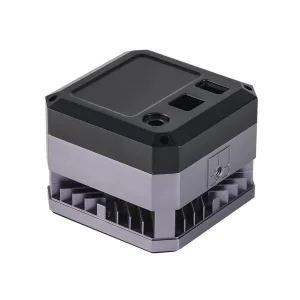
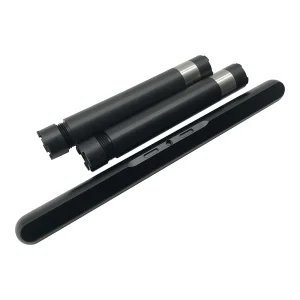
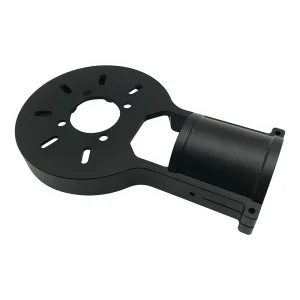
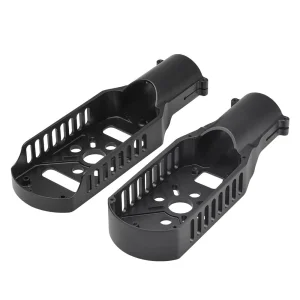
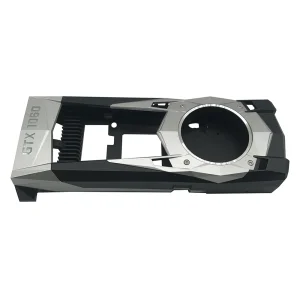
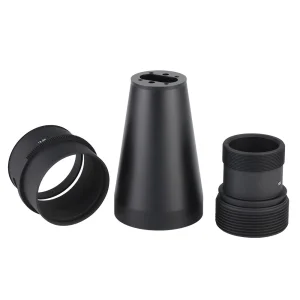
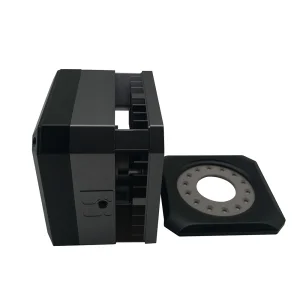
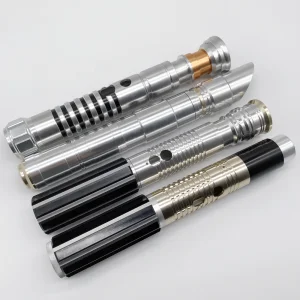
Discover our complete range of custom prototype development and high-precision production parts.
 Xiang Xin Yu