Sourcing Custom Made Stainless Steel Parts in 2026 requires more than comparing online quotations. Buyers must connect material science, machining capability, documentation, and supply-chain resilience. A polished website is not proof of production competence. The evidence is elsewhere.
Peter Zelinski, editor-in-chief of Modern Machine Shop, offers a useful manufacturing reminder: “The most valuable manufacturing knowledge often lives on the shop floor.” That principle matters when evaluating a supplier. Ask how operators control burrs, tool wear, heat distortion, and surface contamination. Request photographs of comparable parts, not only attractive catalog images. A reliable manufacturer should explain its process clearly.
Your RFQ should specify the stainless grade, annual volume, dimensions, tolerances, surface finish, and inspection requirements. State whether 304, 316L, 17-4 PH, or another grade is required. Small differences matter. A 316L component for a marine enclosure needs different verification than a 17-4 PH shaft.
Include drawings in a controlled format. Add acceptable substitutions only when engineering approves them. Require material certificates, dimensional reports, and traceability records. For critical parts, consider first-article inspection and independent testing. Supplier audits can reveal practical details, such as calibration habits and storage conditions.
Lead time deserves careful scrutiny. A low quote may hide delayed tooling, unstable subcontracting, or unrealistic inspection schedules. I have seen sourcing plans fail because packaging was treated as an afterthought. Stainless steel can arrive scratched, contaminated, or poorly protected.
The best choice is not always the cheapest supplier. It is the supplier that can repeatedly deliver the required part, with transparent evidence. Still, no sourcing plan is perfect. Revisit assumptions after the first production run. That is where confidence becomes measurable.
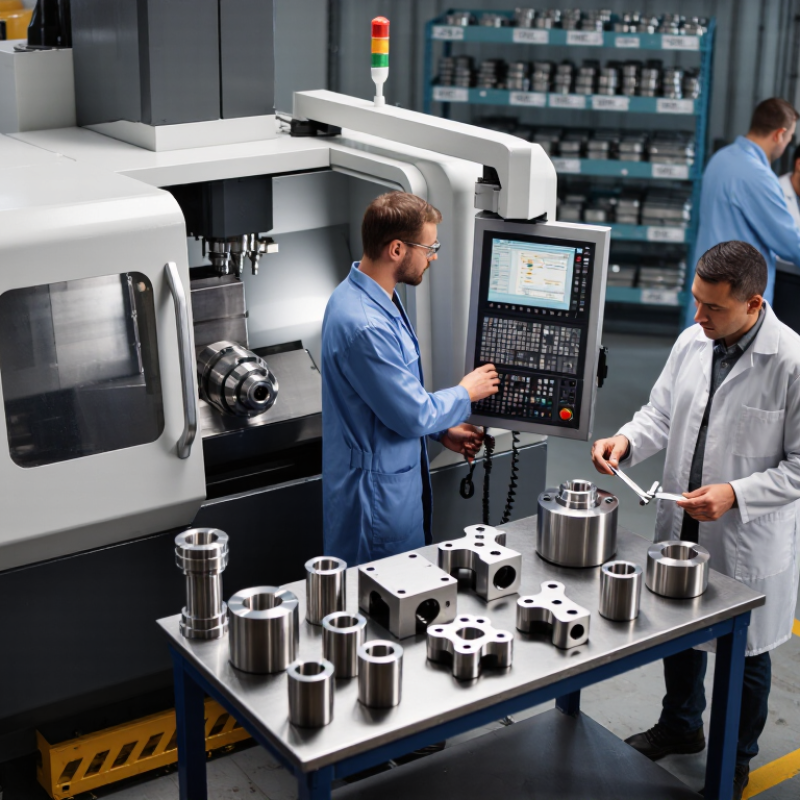
Define Your Stainless Steel Part Requirements and Performance Goals
How to Source Custom Made Stainless Steel Parts in 2026?
Define Your Stainless Steel Part Requirements and Performance Goals
Before requesting quotations, describe the part’s working environment in measurable terms. Record temperature, pressure, load, chemical exposure, cleaning method, and expected service life. A food-processing bracket may need frequent washdowns, while a marine fitting faces chloride-rich moisture. These conditions can change the required stainless steel grade, surface finish, and inspection plan.
The International Stainless Steel Forum reported global stainless crude steel production of about 58.4 million metric tonnes in 2023. That scale does not make material selection simple. Mill certificates should confirm chemistry, heat number, and applicable standards. For mechanical validation, tensile testing under ISO 6892-1 can support decisions about strength and elongation. Dimensional tolerances also need practical limits. Extremely tight tolerances may add cost without improving performance.
Corrosion deserves careful attention. The NACE IMPACT study estimated global corrosion costs at approximately 3.4% of worldwide GDP. A higher alloy grade may reduce maintenance, but it is not automatically the best answer. Specify chloride levels, crevice risks, weld zones, and cleaning chemicals. Then define passivation, polishing, or surface roughness requirements. I have seen drawings call for a bright finish without stating a measurable Ra value. That creates avoidable disagreement. A useful specification includes drawings, samples, acceptance criteria, and traceability requirements. Still, laboratory tests cannot perfectly reproduce every jobsite condition. Recheck assumptions before approving production.
Choose the Right Stainless Steel Grade for Custom Part Production
How to Source Custom Made Stainless Steel Parts in 2026?
Choosing the correct stainless steel grade starts with the working environment, not the supplier’s price. The World Stainless Association reported 58.4 million tonnes of crude stainless steel production in 2023. That scale hides important differences between grades. For indoor brackets, housings, and shafts, 304 stainless steel often provides balanced corrosion resistance and machinability. It is a practical baseline.
Use 316 when parts face salt spray, chlorides, or frequent chemical cleaning. Its molybdenum content improves resistance to localized corrosion, although it does not make the part immune. Ferritic 430 can reduce nickel exposure and material cost in dry, decorative applications. For highly loaded components, precipitation-hardening grades such as 17-4 PH may offer greater strength. They require controlled heat treatment.
Small details matter. Ask for the mill test certificate, heat number, and measured chemistry. Add positive material identification for critical orders. The Nickel Institute reports that stainless steel remains the largest end use for nickel, so future price movement can affect 304 and 316 budgets. Still, choosing only by nickel content is a weak shortcut. Weldability, surface finish, tolerances, and service temperature may matter more. I have seen a cheaper grade fail because the specification ignored cleaning chemicals. The drawing looked complete. It was not. A trial batch, corrosion review, and supplier inspection plan can expose that mistake before production.
How to Source Custom Made Stainless Steel Parts in 2026?
Choose the Right Stainless Steel Grade for Custom Part Production
This chart compares the representative midpoint of chromium and nickel composition ranges for commonly specified stainless steel grades.
Grade 304 is a general-purpose choice for corrosion-resistant machined and fabricated parts, 316L offers improved resistance in chloride and marine environments,
430 provides a lower-nickel option for moderate-corrosion applications, and 17-4 PH is selected when high strength and heat-treatability are required.
Actual chemistry must be verified against the applicable material standard and mill certificate before production.
Evaluate Manufacturing Methods, Suppliers, and Quality Capabilities
How to Source Custom Made Stainless Steel Parts in 2026?
In 2026, sourcing stainless steel parts requires more than comparing unit prices. Start by matching the geometry, volume, tolerance, and finish to the manufacturing method. Laser cutting suits flat profiles and low-volume work. CNC machining handles tight tolerances and complex features. Stamping becomes economical at higher volumes, while investment casting supports intricate shapes. Additive manufacturing can shorten development cycles, but its surface finish may require secondary machining.
Material selection matters equally. 304 stainless steel works well for general environments, while 316 offers stronger resistance to chlorides. Ask suppliers for heat-lot traceability, material certificates, and positive material identification testing. The World Stainless Association reported 58.4 million tonnes of global crude stainless production in 2023. This scale improves availability, but it does not guarantee the correct grade. A supplier should explain real inspection limits, not only display impressive equipment.
Quality capability should be tested through evidence. Request sample inspection reports, CMM results, weld records, surface-roughness readings, and corrective-action examples. ISO Survey data shows that ISO 9001 certification is widespread, yet certification alone cannot prove stable production. Review process controls and first-article approval practices. A small inconsistency remains possible. Plan for it.
Tips: Send a dimensioned 3D model, 2D drawing, annual quantity, and finish standard. Ask for two process options and their cost drivers. Confirm packaging, lead time, inspection ownership, and change-control rules before ordering. Never accept “food grade” or “medical grade” as vague promises; request the applicable specification and test evidence.
Request Quotes and Compare Tooling, Lead Times, and Total Costs
When sourcing custom-made stainless steel parts in 2026, request comparable quotes before choosing a supplier. Ask each workshop to separate material, machining, finishing, inspection, packaging, and delivery costs. Tooling deserves special attention. A low setup fee may hide expensive fixtures, repeated programming, or limited revision support. Request fixture ownership terms and reuse conditions in writing.
Lead time should include design review, material purchasing, tooling, production, inspection, and shipping. A supplier promising five days may exclude material availability. The World Stainless Association reported global stainless crude-steel production above 58 million tonnes in 2023, yet regional grades and sheet sizes can remain difficult to secure. Confirm the exact grade, certification, thickness, and heat-treatment requirements. Do not accept “stainless steel” as a complete specification.
Compare total cost, not unit price. Include scrap allowances, inspection charges, expedited freight, import duties, and corrective-work risk. Deloitte’s 2024 manufacturing outlook continued to identify labor and supply-chain pressure as major operational concerns. That matters for small batches. A shop with a slightly higher quote may offer stronger process control and fewer delays. I have seen customers select the cheapest bid, then pay more for rework and late delivery. That mistake is easy to repeat. Build a comparison sheet with price, tooling, lead time, tolerances, certificates, payment terms, and warranty response. Ask for a sample inspection report. Check the assumptions behind every number.
How to Source Custom Made Stainless Steel Parts in 2026? - Request Quotes and Compare Tooling, Lead Times, and Total Costs
| Sourcing Method |
Typical Stainless Steel Grades |
Example Order Quantity |
Suitable Part Size |
Typical Tolerance |
Tooling / Fixture Cost |
Estimated Unit Price |
Production Lead Time |
Estimated Freight & Packaging |
Estimated Total Cost |
Best Fit |
| CNC Turning |
304, 316L, 303 |
250 pieces |
Round parts up to approximately 250 mm diameter |
Typically ±0.02–0.05 mm |
$350 |
$18.40 / piece |
4–6 weeks |
$280 |
$5,230 |
Bushings, shafts, fittings, threaded components |
| CNC Milling |
304, 316L, 17-4 PH |
250 pieces |
Prismatic parts up to approximately 500 mm |
Typically ±0.02–0.05 mm |
$500 |
$26.80 / piece |
5–7 weeks |
$350 |
$7,550 |
Housings, brackets, manifolds, complex prototypes |
| Laser Cutting and Press Braking |
304, 316L |
500 pieces |
Sheet parts from approximately 0.8–6 mm thickness |
Typically ±0.10–0.30 mm |
$150 |
$9.80 / piece |
3–5 weeks |
$300 |
$5,350 |
Covers, panels, enclosures, flat brackets |
| Investment Casting |
304, 316, 17-4 PH |
1,000 pieces |
Small to medium parts with complex profiles |
Typically ±0.10–0.25 mm |
$4,200 |
$4.60 / piece |
8–12 weeks |
$550 |
$9,350 |
Complex shapes where machining from solid is expensive |
| Cold Forging |
304, 316L, 410 |
5,000 pieces |
Small repeatable parts generally below 100 mm |
Typically ±0.05–0.15 mm |
$12,500 |
$1.85 / piece |
10–16 weeks |
$1,000 |
$22,750 |
High-volume fasteners, pins, sleeves and fittings |
Cost basis: Indicative 2026 budgeting ranges in USD for a standard stainless steel part, excluding taxes, import duties, special surface treatments, inspection reports, certification, and expedited shipping. Estimated total cost is calculated as:
(example quantity × estimated unit price) + tooling or fixtures + freight and packaging.
Final quotations depend on the CAD model, material certification, tolerances, surface finish, inspection requirements, order quantity, delivery location, and payment terms.
Verify Samples, Inspection Records, and Ongoing Supply Terms
How to Source Custom Made Stainless Steel Parts in 2026?
Before approving a custom stainless steel part, treat the first sample as evidence, not decoration. Measure critical dimensions with calibrated tools and record the equipment used. Check surface roughness, weld appearance, hardness, flatness, and thread fit against the approved drawing. Request the material certificate, heat number, and alloy verification results. Photographs help, but they cannot replace measurements. Small details matter.
The International Stainless Steel Forum’s 2024 statistics reported 58.4 million tonnes of global stainless crude steel production in 2023. That scale creates choice, but it can also hide uneven process control. Ask suppliers for inspection plans, dimensional reports, nonconformance records, and corrective-action evidence from recent orders. Confirm whether reports cover every part or only samples. A clean report may still miss recurring defects. Review the original data, not only a supplier-created summary.
Ongoing supply terms deserve equal attention. Specify tolerances, packaging, traceability, approved materials, lead times, capacity, and change-notification rules. Include actions for late delivery, rejected parts, rework, and replacement costs. Agree on a pilot batch before releasing larger volumes. I would not rely on a perfect first shipment alone. Processes drift. Recheck samples periodically, especially after tooling changes or new operators. The weak point is often not machining; it is undocumented change.
FAQS
Describe temperature, pressure, load, chemicals, cleaning methods, and expected service life.
Grade 304 often suits indoor brackets, housings, and shafts.
Specify chloride levels, crevice risks, weld zones, and cleaning chemicals.
State a measurable roughness value instead of requesting a generally bright finish.
Request a mill certificate showing chemistry, heat number, and applicable material requirements.
Measure critical dimensions with calibrated tools and record the equipment used.
Ask for inspection plans, dimensional reports, nonconformance records, and corrective-action evidence.
Define tolerances, packaging, traceability, approved materials, lead times, and production capacity.
Conclusion
Sourcing Custom Made Stainless Steel Parts in 2026 requires a structured approach that connects design requirements with long-term performance goals. Begin by defining the part’s dimensions, tolerances, load conditions, operating environment, surface finish, and expected service life. Then select a suitable stainless steel grade based on corrosion resistance, strength, temperature exposure, machinability, and intended application. A clear specification helps prevent material substitutions, design misunderstandings, and avoidable production delays.
Next, evaluate potential suppliers according to their manufacturing methods, engineering support, quality systems, equipment, and experience with similar components. Request detailed quotations that separate material, tooling, processing, finishing, inspection, packaging, and shipping costs while also comparing lead times and minimum order requirements. Before approving full production, verify samples against drawings and specifications, review inspection records, and confirm how nonconforming parts will be handled. Finally, establish reliable ongoing supply terms covering quality consistency, revision control, delivery schedules, communication, and future capacity, ensuring the selected supplier can support both initial production and long-term demand.

 Xiang Xin Yu